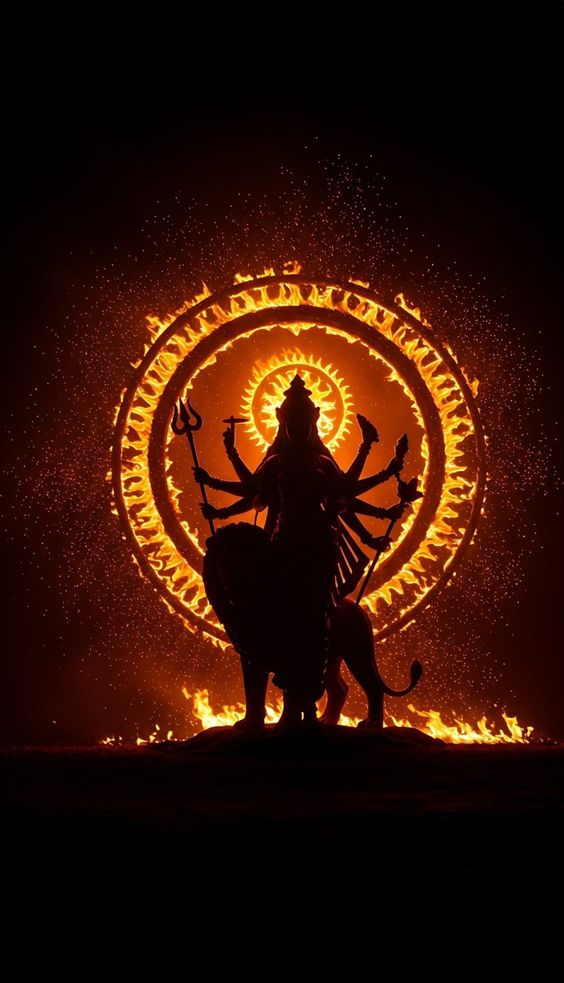
Complete divine story from Vaishnavi's incarnation to her eternal abode at the Bhawan
According to Sanatan Dharma, when Lord Vishnu contemplated the creation of the universe, he first invoked the Adi Shakti (primordial energy). From the combined divine radiance of the Trinity — Brahma, Vishnu and Mahesh — a supreme power emerged. This power would eventually become known as Mata Vaishno Devi.
This power has never been subservient to anyone. She is independent, omnipotent and omnipresent — manifesting repeatedly in different forms across the ages to establish dharma in the world.
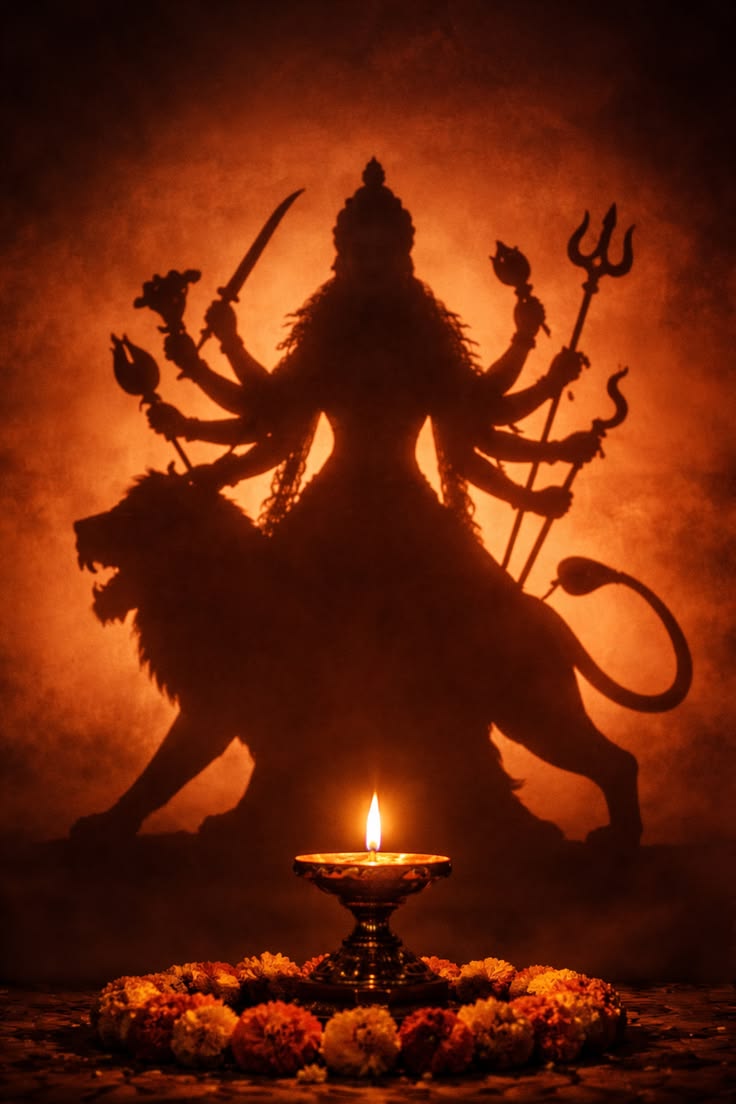
In the Treta Yuga, on the southern coast of India near the Ratan Sagar, there lived a devout Brahmin Pt. Ratnakar and his wife Samridhi. They prayed for years for a child. Moved by their devotion, Adi Shakti promised to be born as their daughter.
On an auspicious Ashtami of Navratri, a divine girl was born. The house was filled with divine light and fragrant flowers rained from the sky. She was named Vaishnavi — for she was a devotee of Lord Vishnu from birth itself.
From the age of three, Vaishnavi began meditating. She could heal the sick with her touch. She was fully vegetarian, always truthful, and never caused harm to any living being. Everyone who met her sensed something extraordinary in her.
When Lord Shri Ram was on his mission to rescue Sita from Ravana, his path crossed that of young Vaishnavi. Lord Ram instantly recognized her as Adi Shakti and bowed to her in reverence.
Vaishnavi expressed her wish to marry Lord Ram. Ram, bound by his vow of one wife, replied with compassion: "You are Adi Shakti herself. In the Kali Yuga, you shall be worshipped above all. Your grand shrine will be on Trikuta mountain. Whoever comes to you with sincere devotion shall have all wishes fulfilled."
Blessed by Lord Ram, Vaishnavi began her northward journey toward Trikuta mountain.
Near Katra, in Hansali village, lived Pt. Shridhar — a poor but deeply devoted man. He announced a free feast (bhandara) during Navratri in Mata's name, despite having no resources.
Mata appeared to him in a dream: "Shridhar, organize the feast. Everything will be arranged." By morning, provisions miraculously appeared at his doorstep. At the feast, a divine girl appeared and lovingly served food to all. One of the guests, Bhairav Nath — a powerful tantric — sensed her extraordinary energy and began pursuing her.
The girl sought refuge with Shridhar, who sheltered her. She then revealed herself to him: "I am Vaishnavi, a part of Adi Shakti. I must complete my penance on Trikuta mountain. You and your descendants shall serve my shrine for generations."
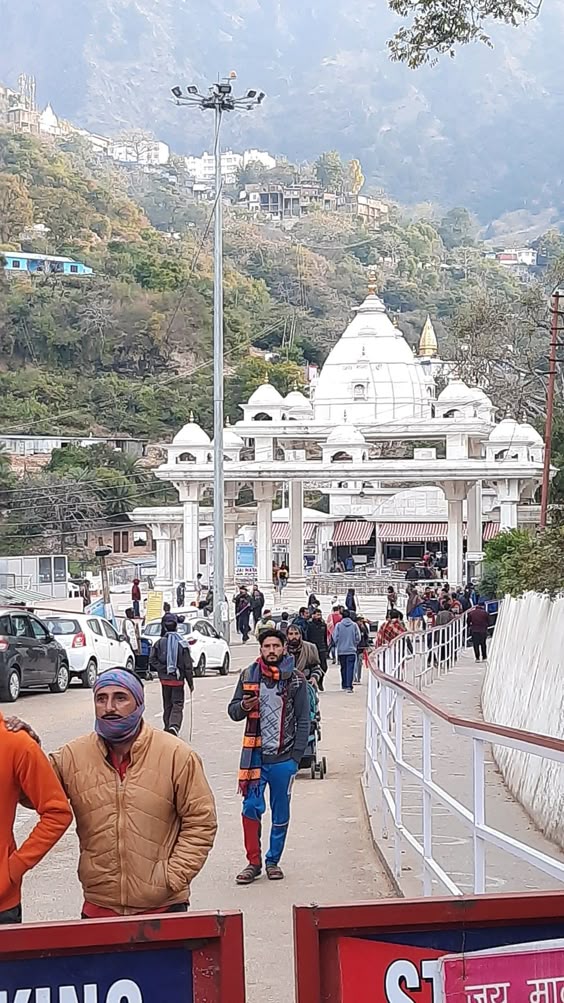
Bhairav Nath was a powerful tantric who wished to harness Mata's divine energy for himself. He followed her toward Trikuta mountain. The journey unfolds in four sacred steps:
Thirsty and far from water, Mata shot her bow at a rock and a stream of holy water gushed forth. This place is called Banganga (arrow + Ganga). Pilgrims wash their feet and pray here to begin the yatra.
Mata rested on a large rock, and when she rose, her divine footprints were permanently imprinted in the stone. This spot is called Charan Paduka — and these self-formed footprints remain visible to this day.
Mata hid in a narrow cave and meditated for 9 months. When Bhairav Nath found her, she broke through the cave wall and escaped. This location is called Ardhkuwari — and the narrow passage through this cave is a unique experience for pilgrims.
Near the holy cave, Mata assumed the fierce form of Mahakali and slew Bhairav Nath. His severed head flew to Bhairav Ghati, now known as Bhairav Temple. Mata then entered the cave and became permanently resident as three sacred Pindies.

Inside the holy cave, three naturally occurring rock formations represent the three forms of Mata:
These are Swayambhu — self-manifested, created by no human hand.
As he died, Bhairav Nath repented and sought Mata's forgiveness. Mata granted him moksha (liberation) and declared: "Whoever visits my shrine must also visit yours to complete the pilgrimage. You shall protect my devotees." This is why visiting Bhairav Temple after the main darshan is considered essential.
Jai Mata Di! "The sacred story of Mata Vaishno Devi teaches us — those who walk the path of devotion, patience and truth are always sheltered by Mata's eternal blessings."